19 September 2026
Grower Champagne: Why Small Houses Outshine Big Brands
The Bottle That Tells You Where It Comes From
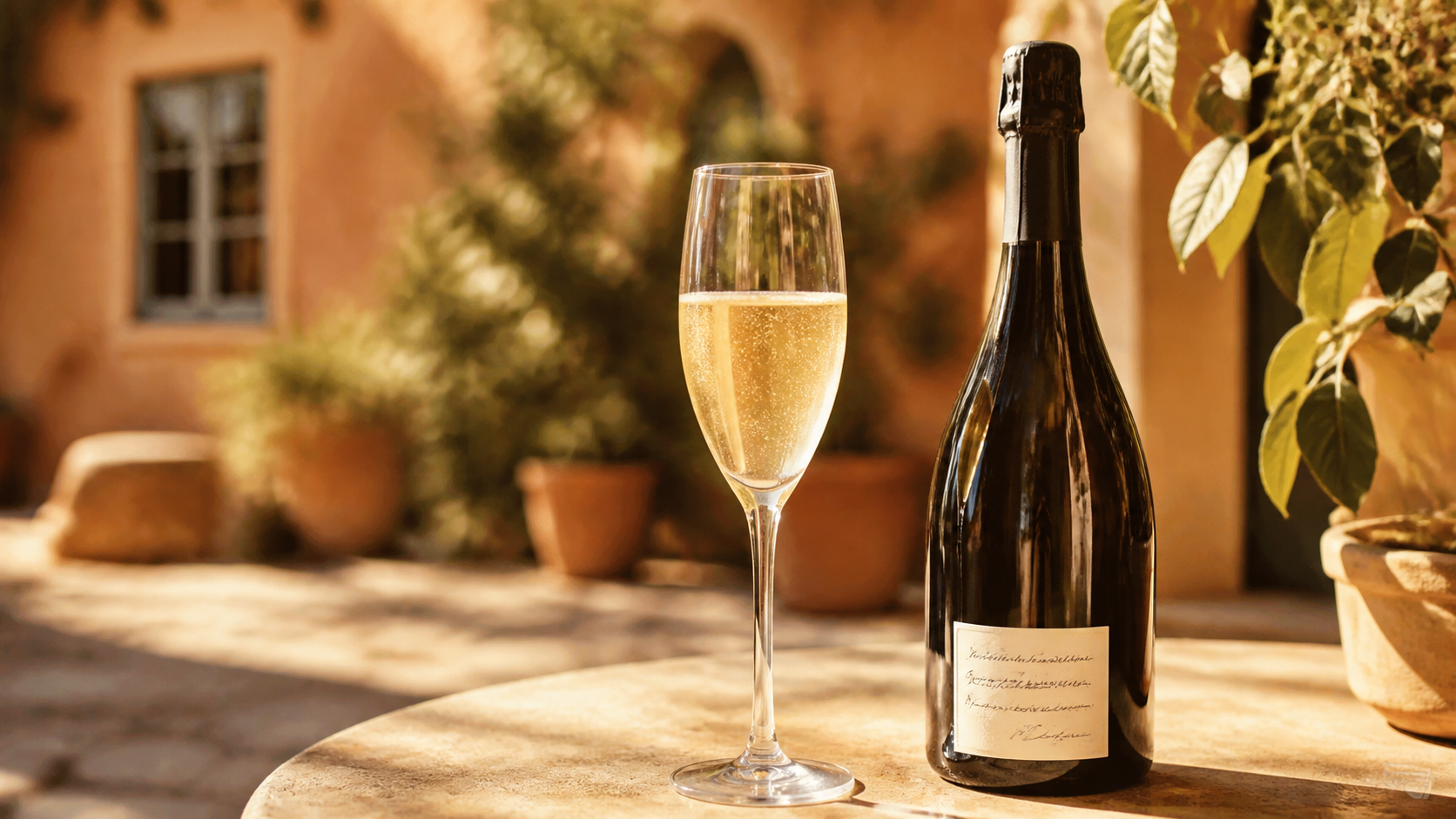
There is a moment — and those who have experienced it do not easily forget it — when a glass of Champagne stops being a drink and becomes a place. A specific slope in the Vallée de la Marne. A chalk-heavy plot in the Côte des Bar. A family's particular obsession with a single grape variety tended across three generations. That moment almost never arrives with a bottle whose label you recognise from an airport duty-free shelf.
Grower Champagne — Récoltant-Manipulant in the language of the appellation — is made by the same family that grows the grapes. No blending across dozens of villages to achieve a house style consistent enough for a global market. No purchased fruit, no anonymous vats. What is in the bottle is what grew in the ground that year, shaped by the hands of people whose names appear on the label and who will answer for every vintage they release.
This is a fundamentally different proposition from the négociant model that built the great Champagne brands. And understanding that difference changes how you drink.
What the Big Houses Do — and Why It Works
To be fair to the grandes maisons: their achievement is remarkable. Sourcing grapes from hundreds of growers across the region, blending across villages and vintages, maintaining a flavour profile that tastes recognisably of itself whether opened in Tokyo or Palma — this requires extraordinary skill and considerable capital. The non-vintage cuvées of the major houses are exercises in consistency, and consistency has genuine value.
But consistency is also, by definition, the suppression of difference. The terroir is blended away. The vintage character is softened. The personality of a particular parcel, a particular chalk seam, a particular microclimate — these are precisely the elements that must be minimised to deliver a product that tastes the same year after year, bottle after bottle, across millions of cases.
What a Grower Gives You Instead
A grower Champagne offers the opposite of this. It offers specificity — and with specificity comes the possibility of genuine discovery.
- Terroir transparency: The grapes come from known parcels. You can taste the chalk, the clay, the elevation. The wine is a portrait of a place, not a brand exercise.
- Vintage character: Growers who release vintage Champagnes are not trying to erase the weather. They are interpreting it. A cool year reads differently from a warm one, and both are interesting.
- Human scale: Production is small. Decisions are made by one person, or one family, who live with the consequences. That accountability shapes quality in ways that corporate structures cannot easily replicate.
- The story behind the glass: When you know that the winemaker's grandmother planted those Pinot Meunier vines, or that the family converted to biodynamic farming not because it was fashionable but because the soil told them to — the wine means more. It simply does.
Why This Matters Particularly on Mallorca
Mallorca has its own relationship with the idea of provenance. The island's wine culture is rooted in small producers, family estates, and a deep connection between landscape and what grows in it. The Tramuntana, the plains of the Pla, the volcanic soils around Manacor — these are not interchangeable, and the winemakers who work them will tell you so directly.
At Aurum Lounge in Port Andratx, we have built our Champagne programme on exactly this philosophy. We work with more than 20 exclusive Champagne houses — not the names you find in hotel minibars, but producers who come here in person to present their wines, explain their methods, and answer questions from people who are genuinely curious. This gives Aurum Lounge one of the most considered and extensive Champagne selections on the island — one that prioritises depth of character over familiarity of label.
The same principle extends to the more than 50 boutique winemakers from Mallorca and beyond who present themselves here. Whether the subject is a grower Champagne from a five-hectare domaine in Aÿ or a limited-release Callet from a family estate in the Mallorcan interior, the conversation is always the same: who made this, where, and why does it taste the way it does?
Pairing: When Food Understands the Wine
Grower Champagnes, because they carry more textural complexity and often more oxidative depth than their négociant counterparts, reward thoughtful pairing. At our tastings, we work with traditional Mallorcan recipes and carefully selected tapas — not as decoration, but as a genuine dialogue between the island's culinary heritage and what is in the glass. A blanc de blancs from a single Grand Cru village in the Côte des Blancs, for instance, finds an unexpected partner in a well-aged Mallorcan sheep's cheese or a dish built around locally caught fish and good olive oil. These are not arbitrary combinations. They are conversations between two cultures that share a respect for primary ingredients.
For those interested in exploring the finest food and wine pairings beyond our events, Santos Gourmet is a trusted name on the island whose approach to sourcing aligns with the values we bring to the glass.
The Members' Perspective
For members of Aurum Lounge, the Champagne programme is one thread in a broader experience — more than 20 exclusive events each year, including private evenings with producers, vernissages hosted by the Associació Kinsky Collection of Modern Art, and a community of people who understand that cuisine, wine, and art are not separate pleasures but expressions of the same sensibility. If that sounds like the kind of depth you have been looking for on Mallorca, the membership page is worth a quiet read.
Come and Taste It for Yourself
Understanding the difference between a grower Champagne and a négociant blend is not an intellectual exercise. It is a sensory one — and the only way to arrive at your own conclusions is to taste, side by side, with someone who knows the producers personally and can place the wine in its full context.
Our next Private Champagne & Collectors' Evening takes place on 2 October 2026 at 19:00 in Port Andratx. It is an evening designed precisely for this kind of discovery — intimate, unhurried, and guided by people who have spent years building relationships with the houses whose bottles we open. We would be glad to see you there.
All upcoming public tastings and events are listed on our events page. No membership required to join us — just a genuine curiosity about what is in the glass.