
01 October 2026
Grower Champagne vs. Big Brands: Why Small Houses Win
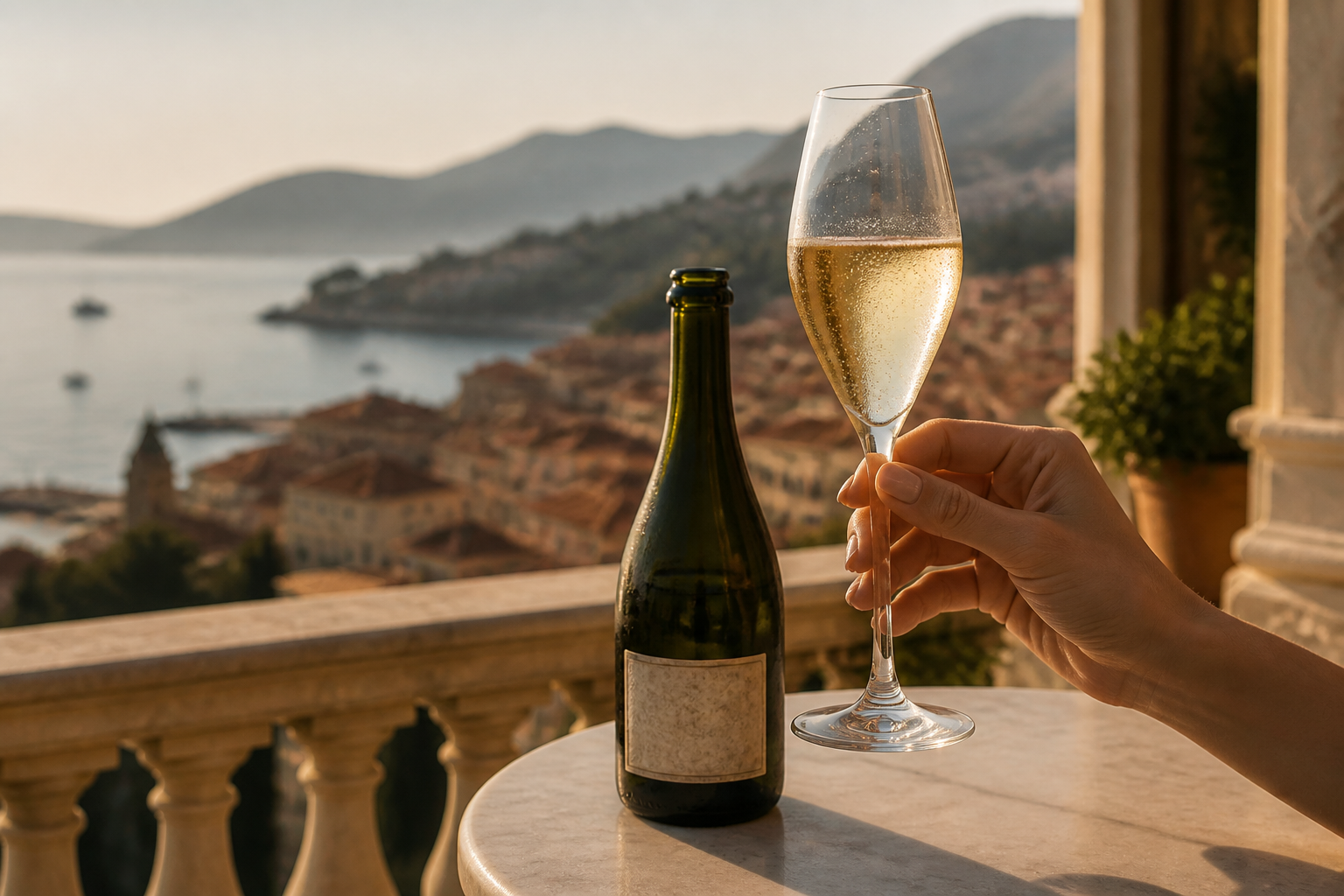
The Bottle With a Face Behind It
There is a moment in any serious conversation about Champagne when the grandes maisons — Moët, Veuve Clicquot, Laurent-Perrier — must step aside. Not because they are without merit. But because merit, in wine, is ultimately about place, people, and the particular. And the grandes maisons, by definition, are about the universal: a house style engineered to taste the same in Tokyo, Dubai, and Palma. Consistent. Recognisable. And, for those who have gone deeper, quietly insufficient.
The grower Champagne — produced by a récoltant-manipulant, a family that grows its own grapes and vinifies them itself — is something else entirely. It is the difference between a postcard of the Champagne region and a conversation with someone who was born there.
What «Grower» Actually Means
In the Champagne appellation, roughly 90 percent of the vineyard surface is farmed by around 19,000 growers. The majority of those grapes are sold to the large négociant houses, who blend them across villages, vintages, and grape varieties to produce their signature cuvées. The system works — it produces reliable, polished wine at enormous scale.
But a small fraction of those growers — perhaps 5,000 — bottle their own wine under their own name. These are the récoltants-manipulants. Their labels carry the letters RM, a quiet signal to those who know what to look for. Their wines come from specific parcels, sometimes a single lieu-dit, farmed with the intimacy that only ownership and inheritance can sustain. The result is Champagne with a terroir — with the taste of a particular chalk slope, a particular microclimate, a particular family's philosophy of when to harvest and how long to age.
What You Taste in the Glass
- Specificity: A grower from Aÿ tastes of Aÿ. A grower from Le Mesnil-sur-Oger carries the mineral tension of that village's chalk. You are drinking a place, not a blend designed to erase place.
- Vintage character: Many small houses produce vintage or single-year wines that reflect the actual weather of that harvest — its generosity or its austerity.
- Winemaker personality: Some favour extended lees ageing and oxidative complexity; others pursue freshness and precision. These are choices made by a person, not a committee.
- Lower dosage, higher honesty: Without the commercial imperative to soften rough edges for a mass palate, many growers work with minimal dosage — the wine speaks for itself.
Why This Matters More Than It Used To
A generation ago, grower Champagne was a specialist obsession — the province of sommeliers and collectors willing to seek out obscure négociants in the back streets of Épernay. Today, the conversation has shifted. The most interesting wine lists in Europe — and, increasingly, on Mallorca — are built around producers with a story, a face, a set of values that translate into the liquid in the glass.
This is not sentimentality. It is the recognition that authenticity has flavour. That a wine made by someone who has farmed the same vines their grandfather planted tastes different — more rooted, more alive — than one assembled from purchased fruit and optimised for global consistency.
Discovering Grower Champagne in Port Andratx
At Aurum Lounge in Port Andratx, we have spent years building what is, by any honest measure, one of the most significant Champagne selections on Mallorca. We work with 20 exclusive Champagne houses — not the grandes maisons you find at every beach club, but producers of genuine distinction, including growers whose wines rarely leave the region without a personal introduction.
What makes our approach different is the same thing that makes grower Champagne different: the people behind the bottle are present. The families and winemakers who produce these wines come to Port Andratx and present their work themselves — their vineyards, their philosophy, the particular vintage in your glass. This is the format we have built our public tastings around, and it changes everything about how you understand what you are drinking.
Our partners at ZALUD GmbH share this commitment to provenance and producer relationships — a sensibility that runs through everything we select and serve here.
Champagne and the Table: Pairing as Culture
Alongside every Champagne we present, we serve tapas and traditional recipes chosen to illuminate the wine rather than compete with it. A blanc de blancs from the Côte des Blancs finds its counterpart in a dish built on acidity and minerality; a rich, pinot-dominant grower wine calls for something with more weight and fat. Food and wine as a single conversation — this is how Champagne was always meant to be drunk, and it is how we serve it.
For those who want to go further, membership at Aurum Lounge opens access to more than 20 exclusive events each year — intimate evenings with producers, vernissages with the Associació Kinsky Collection of Modern Art, and a community of people for whom the exceptional is simply the standard. Our team is here to guide you through it all.
Come and Taste for Yourself
The argument for grower Champagne is ultimately not an argument at all — it is an invitation to taste. Words about terroir and récoltants and dosage levels only carry you so far. The rest happens in the glass, in good company, with someone who grew the grapes telling you why this particular harvest matters.
We would like to extend that invitation concretely: join us for our Private Champagne & Collectors' Evening on 2 October 2026, beginning at 19:00 in Port Andratx. It is a public event — no membership required, simply a genuine interest in what Champagne can be when it is made by people who have staked their name on it. You are welcome to browse all upcoming events and find the evening that suits you best.
We look forward to opening something worth talking about with you.